
Iran resumes crude exports as two supertankers breach U.S. blockade
A confrontation over enforcement and legitimacy — economic pressure, diplomatic openings, and competing claims about who counts as authoritative.
The brief
Two Iranian National Tank Company supertankers — Diona and Hero II — crossed a U.S. Navy-enforced blockade perimeter on June 15, 2026, carrying about 3.8 million barrels of crude, marking Iran’s first crude exports in two months. Coverage and reactions diverge because the event sits at the intersection of law-of-the-sea and sanctions enforcement (who has the right to interdict), immediate economic incentives (relief for Tehran’s collapsed oil revenues), and diplomatic signaling (exports halted or resumed as leverage in talks). Observers disagree about whether the tankers’ movement represents a lawful re-opening enabled by diplomacy, an unlawful breach that undermines U.S. enforcement, or a negotiated de-escalation whose terms remain opaque — and those differences trace to conflicting judgments about which institutions or processes adjudicate legitimacy (naval enforcement and sanctions regimes vs ad hoc diplomatic arrangements).
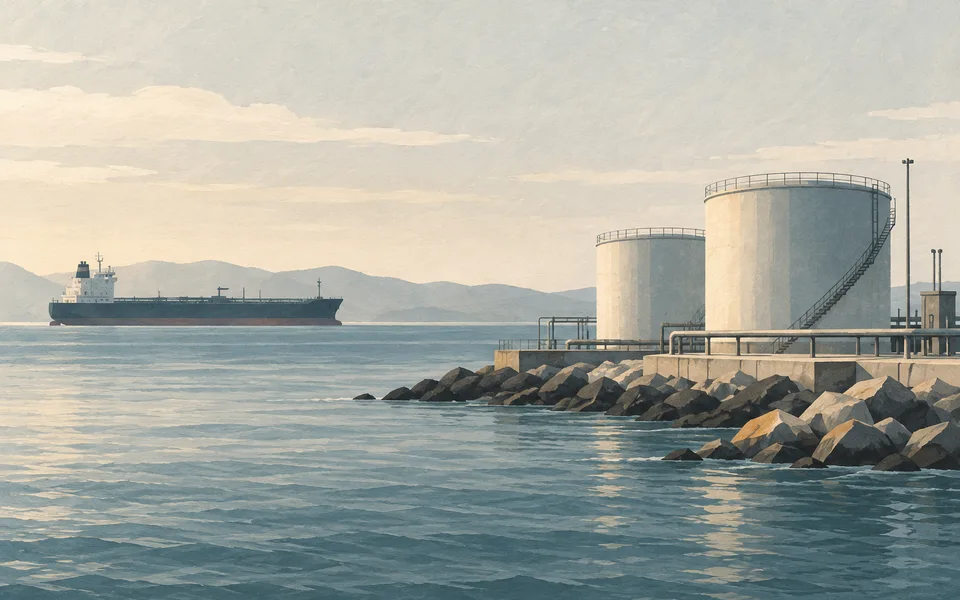
On June 15, 2026, two Very Large Crude Carriers (VLCCs) owned by the National Iranian Tank Company — the Diona (IMO 9569695) and Hero II (IMO 9362073) — crossed a perimeter that U.S. naval forces had been enforcing around Iranian ports. Combined, they carried roughly 3.8 million barrels of crude oil. Open-source automated identification system (AIS) traces and satellite imagery cited in reporting show the vessels moving out of the blockade area, an act that immediately registered across markets and capitals.
The immediate mechanics are straightforward: a perimeter enforced by the U.S. Navy constrained Iran’s seaborne exports for months, sending Iranian shipment volumes and revenues to a fraction of their pre-blockade levels. Analysts and reporting cite a near-84% decline in Iran’s oil revenues between March and May — from about 1.8 million barrels per day in March to below 300,000 bpd in May — inflicting an estimated $6 billion loss. The financial pressure on Tehran is thus an essential causal driver for the resumption.
But the political meaning of the tankers’ exit is contested. One reading treats the movement as the predictable economic counterweight: once negotiations reached a technical understanding — reporters say a framework was signed electronically in mid-June with a formal signing planned at Burgenstock in Switzerland and a 60-day follow-up — enforcement relaxed and Iran moved crude back onto the market. That account frames the event as diplomacy producing a managed de-escalation, where both sides trade immediate enforcement posture for a longer negotiating window.
A contrasting reading foregrounds enforcement and legal legitimacy: critics of the move argue that the U.S. perimeter represented a sanction-enforcement mechanism whose purpose was to choke Iran’s export revenue. From that vantage, the tankers’ crossing looks like a breach of a policing operation and raises questions about the United States’ capacity or willingness to sustain unilateral enforcement absent multilateral backing. Those who emphasize enforcement view the ships’ exit as either a failure of deterrence or an indication that political calculations — for example, a choice to prioritize talks over interdiction — changed the operational mandate.
Markets responded before narratives hardened. Brent and West Texas Intermediate both fell sharply (reported declines near 5.1% and 5.8% respectively) on optimism that more Iranian crude and a safer Strait of Hormuz would relieve supply anxieties. That price reaction is itself a causal actor: lower prices reduce the immediate punitive effect of sanctions and reduce the leverage of enforcement, altering incentives for all parties.
An upstream conflict animates reporting and reactions: who is entitled to define legitimacy and what counts as credible evidence? For U.S. officials and supporters of the blockade, legitimacy is tied to a sanctions architecture and naval enforcement as instruments to prevent Iran from funding activities Washington deems harmful. For Tehran and its customers, legitimacy is cast in sovereignty terms and in outcomes: trade and energy security. International actors like China publicly cautioned against disruptions to global energy supplies and opposed unilateral sanctions, which further complicates enforcement calculations; Beijing’s stance signals that diplomatic and economic second-order effects — not just maritime interdiction — will shape outcomes.
Trust and messenger credibility matter. If a party distrusts the opponent’s stated intentions, it will interpret tactical moves as deception or coercion. Conversely, signals that look like concession to one audience can look like capitulation or a calculated pressure-release to another. The result: the same operational fact (two tankers crossing a perimeter) spawns multiple policy inferences — a negotiated thaw, an enforcement failure, or a tactical gambit — depending on which upstream institution (naval authority, sanctions regime, or diplomatic forum) an audience treats as binding.
Practically, the resumption will relieve some immediate economic pressure on Tehran and dampen oil-price volatility. Politically, it opens a 60-day negotiation window whose terms and verification mechanisms will determine whether this moment stabilizes into a durable arrangement or simply postpones renewed confrontation. The most consequential unresolved questions are procedural: were operational rules of engagement changed, explicitly or implicitly, to allow the tankers out; what guarantees, if any, anchor the expected follow-up talks; and which multilateral institutions will validate any agreement so that enforcement does not return as a unilateral shadow? Those process questions — not only the number of barrels moved — will determine whether this episode reduces or redistributes the risk of future escalation.
Key facts
10 pointsCheck the reporting behind each point.
Iran recorded its first crude oil exports in two months after two National Iranian Tank Company supertankers — Diona and Hero II — exited the area of a U.S. Navy-enforced blockade carrying about 3.8 million barrels of crude.
The tankers Diona (IMO 9569695) and Hero II (IMO 9362073) are VLCCs belonging to the National Iranian Tank Company; their crossing of the blockade perimeter was verified via AIS data and satellite imagery on June 15, 2026.
Reports indicate a framework agreement was signed electronically in mid-June, with a formal signing event scheduled at Switzerland’s Burgenstock resort and a subsequent 60-day negotiation period anticipated to address Iran’s nuclear program and sanctions relief.
Sources for this story 6 links
Links show the reporting used for this brief. Multiple links may report the same underlying account; they do not automatically mean independent confirmation.
Compare perspectives
See what each framing puts first, leaves out, and worries about.
What matters most in each reading?
Enforcement must be multilateral and legally grounded.
Progressive-leaning framing
- Rule-of-law and multilateral legitimacy
- Risks of unilateral enforcement
- Humanitarian and economic impact on civilians
Verification and results justify enforcement or negotiation.
Conservative-leaning framing
- Pragmatic leverage and outcome accountability
- Enforcing sanctions until measurable results occur
- Skepticism of institutions that delay correction
Illustrative editorial analysis, not a survey of news coverage. These readings do not represent everyone or imply that both arguments have equal evidence.
Practice a conversation about this story
More from International.